Article
Breaking Them in Gently: First Grazing for Autumn-Born Calves
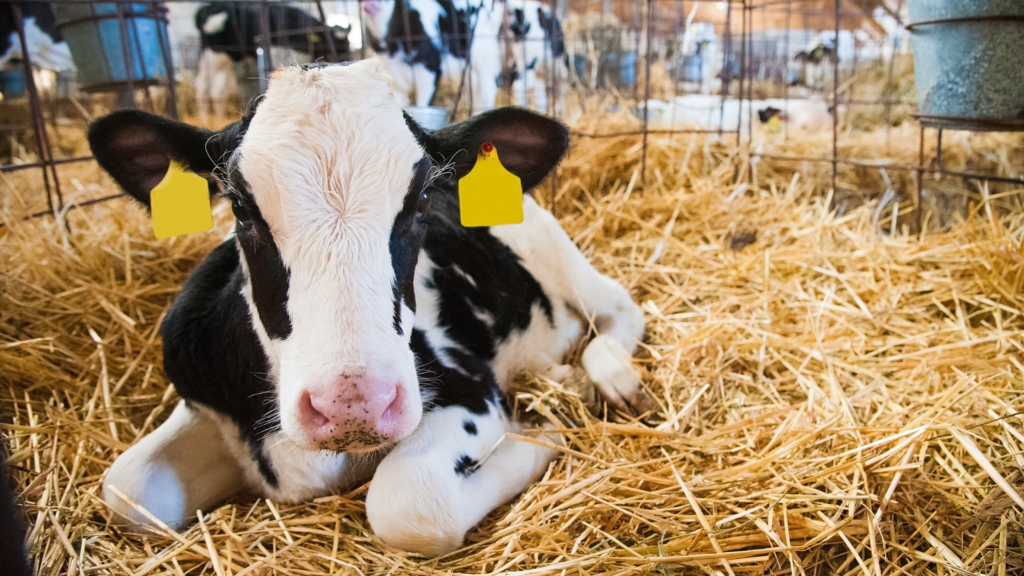
Turning autumn-born calves out to grass for the first time is a key step in their development – and one that’s worth doing right. A steady, well-managed introduction helps avoid setbacks and sets them up for a good grazing season.
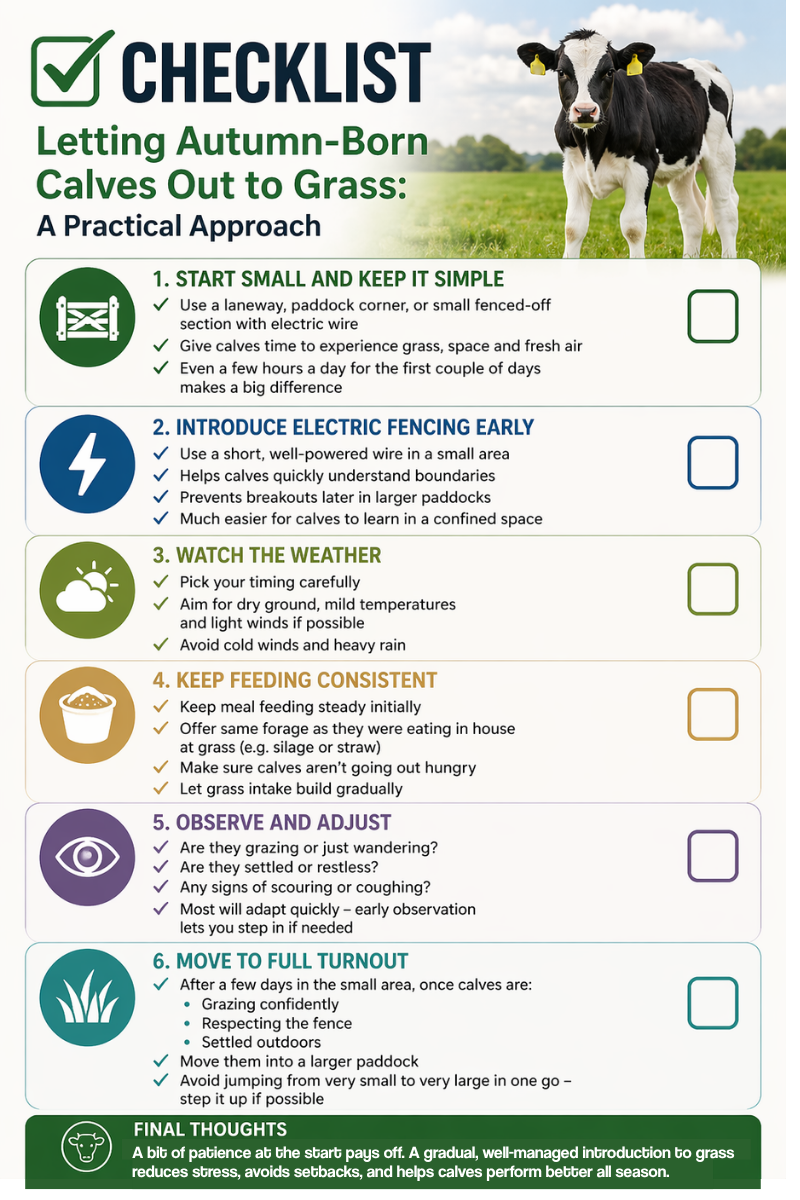
Letting Autumn-Born Calves Out to Grass: A Practical Approach
After a winter indoors, getting calves out to grass is a welcome change – for both stock and farmer. But calves that have never seen grass need time to adjust. Rushing them straight into a big field can lead to stress, poor thrive, or even health issues. A gradual introduction works far better.
Start Small and Keep It Simple
Before releasing calves onto a full field, let them out into a small, controlled area first. This could be:
- • A laneway
- • A paddock corner
- • A small fenced-off section using electric wire
The idea is to give them a chance to experience grass, space, and fresh air without being overwhelmed.
In these smaller areas, calves:
- • Learn to graze properly
- • Get used to walking on uneven ground
- • Become familiar with electric fencing
- • Settle into outdoor conditions without stress
Even a few hours a day for the first couple of days makes a big difference.
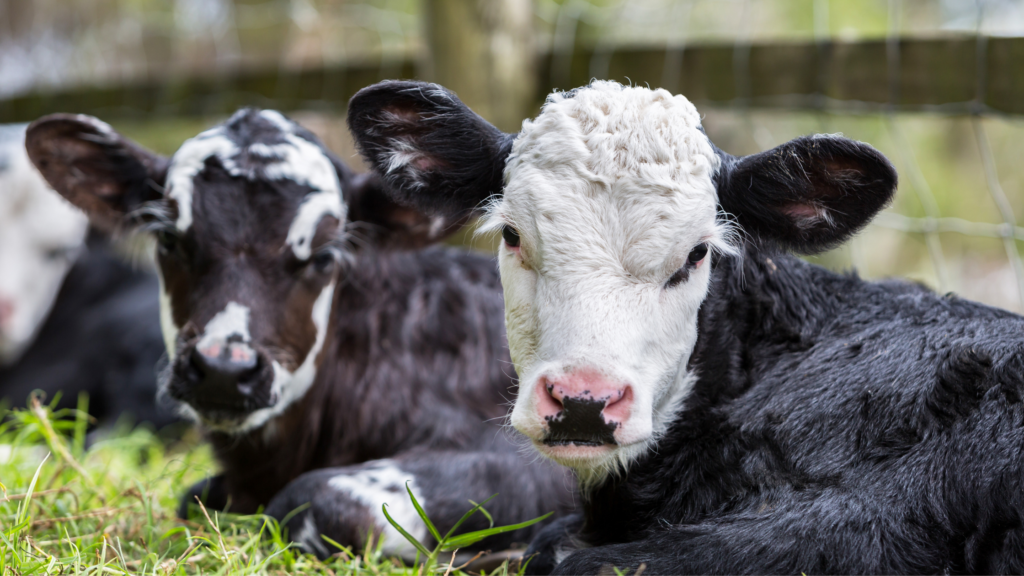
Introduce Electric Fencing Early
If you’re using electric fences (and most systems do), this early stage is the perfect time for calves to learn respect for it.
A short, well-powered wire in a small area:
- • Helps calves quickly understand boundaries
- • Prevents breakouts later when they’re in larger paddocks
- • Saves time and hassle down the line
It’s much easier for calves to learn in a confined space than when they have acres to run.
Watch the Weather
Pick your timing carefully. Turning calves out into cold winds and heavy rain can knock them back.
Aim for:
- • Dry ground
- • Mild temperatures
- • Light winds if possible
Even hardy calves benefit from a good first experience outdoors.
Keep Feeding Consistent
Grass is a change from winter diets, so don’t cut concentrates or forage too quickly.
- • Keep meal feeding steady initially
- • Offer same forage as they were eating in house at grass e.g. silage or straw
- • Make sure calves aren’t going out hungry
- • Let grass intake build gradually
This avoids digestive upsets and keeps growth on track.
Observe and Adjust
Spend time watching calves during the first few days:
- • Are they grazing or just wandering?
- • Are they settled or restless?
- • Any signs of scouring or coughing?
Most will adapt quickly, but early observation lets you step in if needed.
Move to Full Turnout
After a few days in the small area, once calves are:
- • Grazing confidently
- • Respecting the fence
- • Settled outdoors
…you can move them into a larger paddock.
Try not to jump from very small to very large in one go-step it up if possible.
Final Thoughts
A bit of patience at the start pays off. Letting autumn-born calves ease into grass through a small, controlled introduction area makes the transition smoother, reduces stress, and helps them perform better over the grazing season.
It’s a simple step – but one that can save a lot of problems later on.