


Article
Keeping Calves Dry: Why Bedding, Air, and Weather Matter More Than You Think
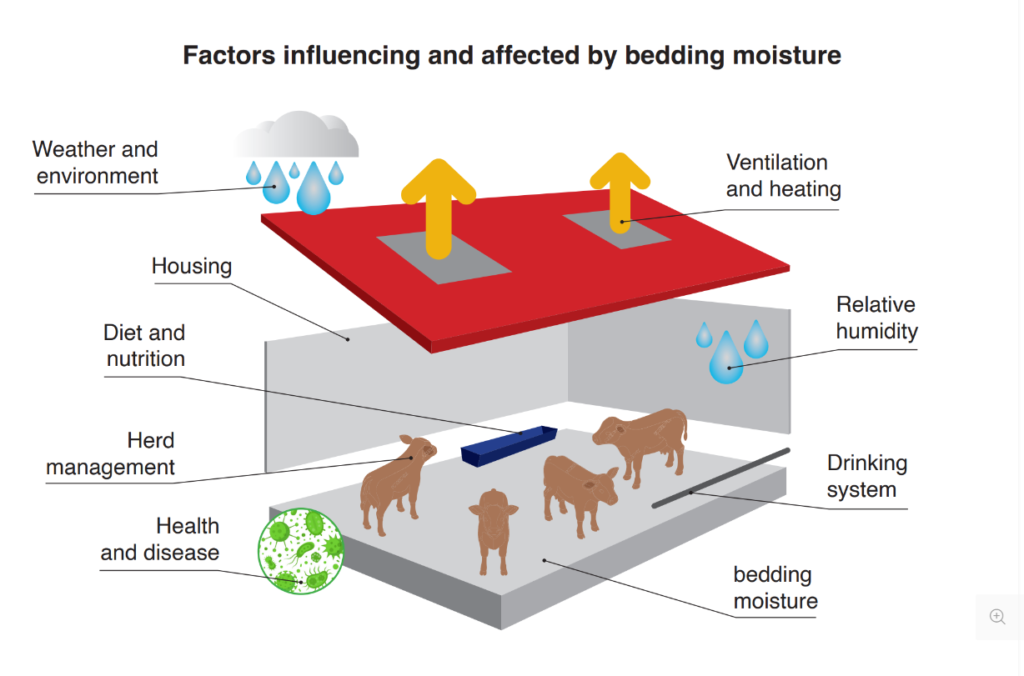
February and March 2026 has brought unusually wet weather across the UK and Ireland, pushing humidity levels in calf sheds to new highs. Wet air means wetter beds, damp boots, and moisture-laden equipment. With little natural drying from sun or wind, and poor airflow in closed sheds, the moisture builds up quickly, slowing evaporation and creating the perfect environment for bedding to stay damp.
If you’ve ever stepped into a calf shed and felt the dampness underfoot, followed by the sharp scent of ammonia, you know that wet bedding is a serious problem. But what makes bedding stay wet, and what does it mean for the health of your calves?
When bedding like straw or sawdust gets damp, it becomes a breeding ground for bacteria and microbes. Ammonia is released as urine breaks down, especially in warm, moist conditions. This ammonia can cause respiratory issues, eye irritation, and discomfort for calves, whose sensitive systems are particularly vulnerable.
Recent research has provided insights on how to better manage bedding moisture, airflow, and humidity to improve calf health.
Why Dry Bedding Matters for Calves
Dry bedding is about more than just comfort for calves – it’s essential for their health, growth, and overall well-being. Wet bedding pulls heat away, leading to cold stress, promotes bacteria that cause scours and pneumonia, and can discourage calves from lying down, which affects their growth and rest. Since calves don’t have the same reserves as older cattle, they feel the effects of wet bedding quickly.
Under good conditions, 50% of moisture is expected to be removed by evaporation, the rest stays in the bedding and must be managed manually. During periods of cold damp weather realistically more like 20-30% of the moisture evaporates and consequently beds are saturated much faster.
What Affects How Bedding Dries?
1. Moisture Already in the Bedding Once bedding is saturated with urine, manure, and spills, it dries much slower. Regularly removing wet bedding, preventing spills, and adding fresh bedding often are essential for maintaining a dry environment.
2. Air Movement Airflow is one of the most important factors in drying bedding. Moving air carries moisture away and replaces it with drier air. Even a small breeze can make a huge difference. Across all bedding types, forced ventilation at 1 m/s increases the drying rate by 65–131% compared to no ventilation. Open ridge vents, doors, or side panels, and avoid dead air pockets in the shed. Fans, even on low speed, can help significantly.
3. Humidity High humidity slows down the drying process. When the air is already saturated with moisture, bedding can’t dry properly (Table 1). Poor ventilation combined with high humidity means the bedding stays damp, much like a wet winter day when nothing seems to dry out.
Temperature Isn’t the Key
While warmer air can aid drying, it’s less effective than proper airflow and controlling humidity. A warm but stuffy shed will still have damp bedding, while a cool, well-ventilated shed tends to stay drier. Calves can stay warm with a clean jacket or by nesting in a deep bed of straw.
Does Bedding Type Matter?
Yes, but management is more important. Finer materials like sawdust or processed bedding dry faster, while long straw holds moisture longer. Chopped straw or absorbent materials work better than long straw. Whatever bedding you choose, make sure to keep it fresh and topped up frequently.
What’s under the bedding?
Flooring plays a critical role in this process by determining drainage and moisture retention. Impermeable surfaces such as solid concrete limit drainage and increase bedding wetness, whereas well-designed sloped or permeable floors help remove excess moisture and maintain drier conditions. Therefore, effective bedding management is particularly important where evaporation is limited and drainage is poor.
What This Means in a Calf Shed
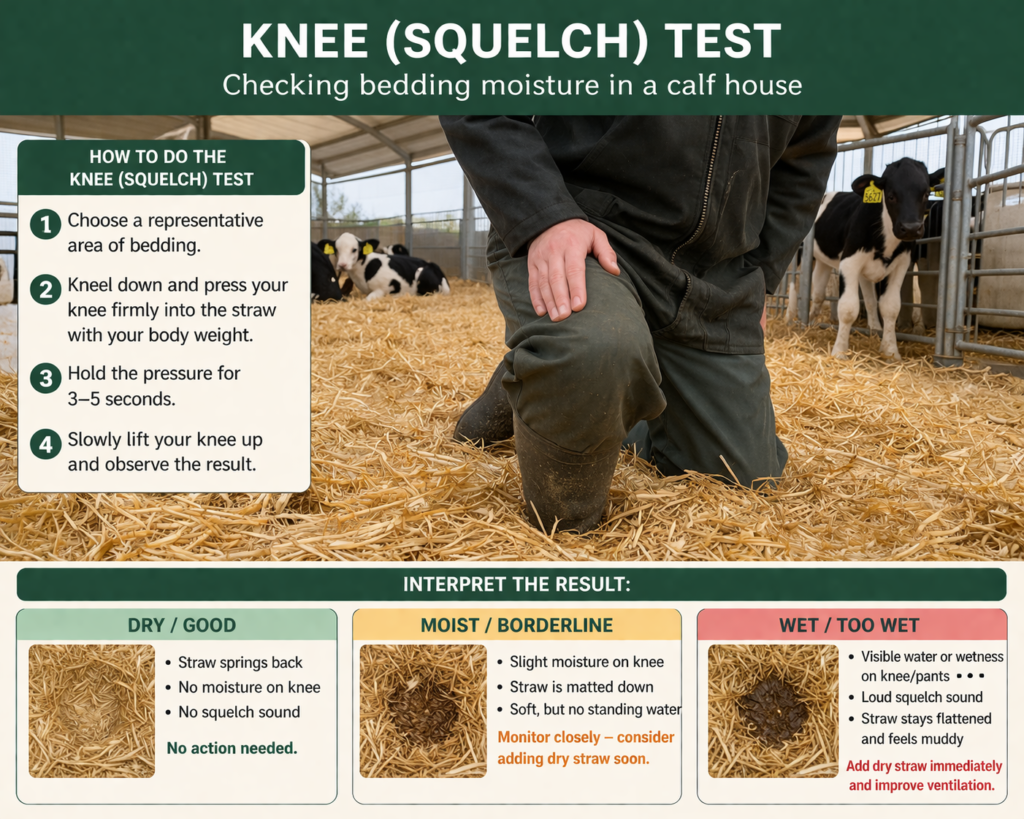
The biggest mistake is adding more bedding without improving airflow. The key to dry bedding and healthy calves is good ventilation and proper bedding management. Keep air moving (open vents, doors or side gaps and avoid closing up housing too tightly), control humidity (avoid overcrowded pens and remove very wet patches quickly), and regularly add fresh bedding – don’t wait until it’s soaked. Proper floor drainage (5% slope) to help prevent moisture build-up is also recommended.
Conclusion
In short, wet bedding creates a perfect storm for health issues in calves. It increases the risk of respiratory problems, scours, cold stress, while also hindering growth and development. Proper bedding management and maintaining dry conditions are essential for keeping calves healthy, comfortable, and thriving