


Article
How to get the best out of automatic calf feeders: Part 2
Following on from our previous article on automatic calf feeders, this part focuses on the calf management practices needed to get the most out of machine feeding.
The Importance of Excellent Stockmanship
It is more important than ever that the right person is dedicated to looking after the calves.
A good stockperson will physically check the calves at least twice a day. They will also frequently review data produced by the automatic feeder.
This data might flag up early warning signs of ill health. For example, it may show that calves are not drinking, or are slower to drink than normal.
Hygiene and Disease Prevention in Automatic Calf Feeders
Before moving from manual to automatic feeding, it is essential that calf health is good. Excellent management of colostrum and transition milk feeding in the baby calf is important. This sets the foundations for good health and performance throughout the animal’s life. The aspiration should be to achieve a high passive immune status in all calves. This gives them the best chance to fight disease in the early weeks when they are undergoing several changes.
Sick calves are less likely to push for access to the feeder. Disease transmission is also a major consideration if several calves are sharing one teat. This is because it increases the risk of contamination between calves.
Tip-top hygiene is a must:

• Wash and change teats daily
• Keep feeding and bedding areas clean and well drained, to prevent a build-up of bacteria
• Water drinkers must be kept clean and fresh
• The calf rearer must be clean and sanitised before entering pens
Managing Group Size for Automatic Calf Feeders
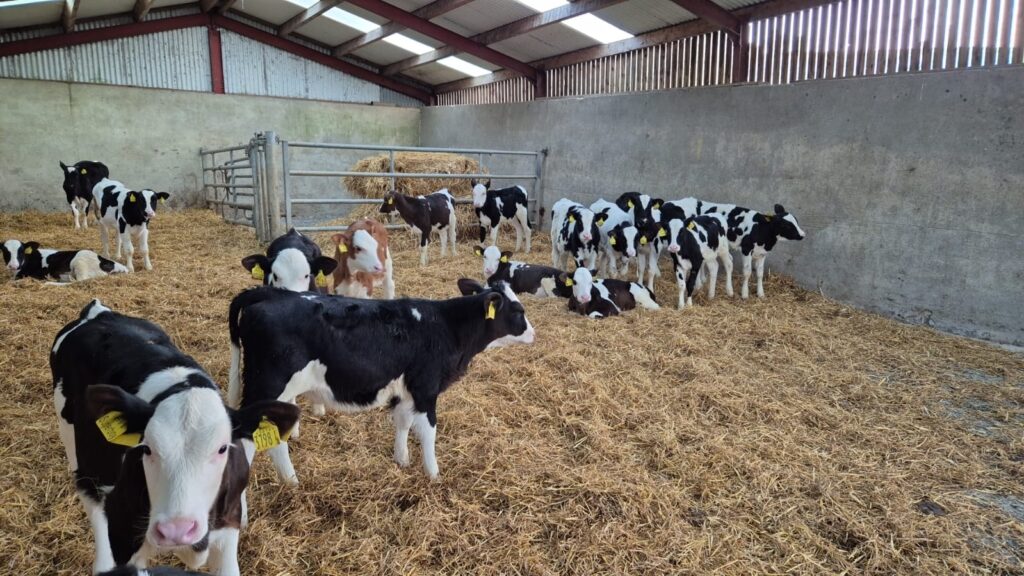
To fully utilise the automatic calf feeder, farms often have large group sizes in comparison to manual systems.
More calves in one area means more calves suckling the same teat. This increase in direct contact has a huge impact on disease transmission.
Higher stocking densities often mean bedding can be wet and have higher levels of faecal contamination, and result in less space per calf.
A Swedish study (Svennson, 2006) highlighted that reducing group size for calves on automatic feeders is associated with a reduced risk of respiratory illness and increased growth rates.
Calf age
Having smaller groups of calves in pens means it is more likely that a narrower age range in each group will be achieved. This is a positive for both calf health and performance. Aim for an age gap between calves of no greater than two weeks.
Older calves can spread disease to younger calves that are not yet strong enough to fight the infection. The older animals may be more inclined to bully the younger calves and keep them out of the feed station. Therefore, by keeping a smaller age gap between animals it will allow for young calves to get their allocation without having to compete for it.
The age at which calves are introduced to the feeder is important too. The amount of time a calf spends in its own pen before transitioning to the feeder is often dictated by herd size and pen availability.
The feed calves are consuming also needs to be factored in. Ideally, calves should be fed colostrum followed by transition milk or transition milk replacer for at least their first 10-14 days of life. This may determine when calves are moved onto the automatic calf feeder. If a transition milk replacer is being fed through the machine, it may be possible to move calves sooner. However, this may only work if calves are close in age and require the same feed, or if the machine has two different hoppers for feeding different types of milk.
It is important that calves of all sizes and ages are catered for in the housing set-up – for example calves should not have to strain to reach water drinkers or meal troughs.
Pitfalls of training pens
Many farms use training pens, moving calves to a follow-on pen once they are able to help themselves to milk. Disease management is a critical concern when using automatic calf feeders, especially in high-traffic training pens.
Without sufficient management around new calves entering the pens, there is rarely a suitable time for a crucial clean-out.
As an alternative, an ‘all-in-all-out’ grouping system helps to reduce the spread of disease massively. It means that because the calves will be weaned at around the same time, the pen can be cleaned and disinfected and be ready for the next batch of calves to enter.
Block calving lends itself to this type of grouping as calves are born in a defined period of time and, as such, are more uniform in age.
Training Calves to Use Automatic Calf Feeders Effectively
Training calves to suckle in their new environment is important. However, they mustn’t become over-reliant on the rearer putting them on the teat.
Generally, calves will quickly pick up on what they need to do, especially if they are among calves who are already trained. Some may require more assistance than others, but the ambition should be to ensure that they are all drinking well and in robust health when they are initially introduced to the feeder.
Aim to transition calves into their new pen with a full stomach and allow them to familiarise themselves with their surroundings. Once some time has passed, and they are hungry and ready to suckle, return to the pen for training.
It is important not to change their feed type on the same day as they are moved. If calves are drinking colostrum and transition milk in their single pens prior to moving to machine feeding it is best practice to transition them onto the milk replacer that they will be consuming on the feeder a few days prior to the move to avoid any digestive upsets.
Automatic calf feeder station placement
Position the feed stations at the lowest point of the fall in the shed floor. This creates good drainage and prevents the build-up of moisture around the station. Another consideration around placement is ease of access for cleaning.
Calves are naturally curious so keep any wires or tubes out of reach to avoid chewing and unnecessary accidents.
The feed stalls should have solid sides and be just wide enough for a single calf. This prevents multiple calves from trying to access the feeder at the same time or bigger calves robbing younger animals of their milk allocation. To prevent pushing and queuing, allow ample space in the lead-in to the feeding stall.
Leave a Reply