Calf Health

Development of the Calf Gastrointestinal Tract: Rumen Growth, Epithelial Maturation, and Microbial Colonisation

Explore how the calf gut transforms from monogastric to ruminant, and why early starter feed, VFAs and microbiome colonisation are key to rumen growth, health and performance.
Read more...

Less Can Be More: Rethinking Colostrum Feeding for UK Calves

Colostrum remains the calf’s first line of defence. High immunoglobulin (IgG) levels are critical, but achieving and maintaining them depends on multiple factors, including dry cow nutrition, timing of collection, storage temperature, and hygiene.
Read more...

Lumpy Skin Disease

Lumpy skin disease (LSD) is a notifiable viral disease in cattle and water buffalo, spread mainly by biting insects. While it poses no risk to humans, LSD can cause severe economic losses through reduced milk production, trade restrictions, and cattle deaths. Learn about its symptoms, prevention, and control measures.
Read more...

Once a day feeding in calves

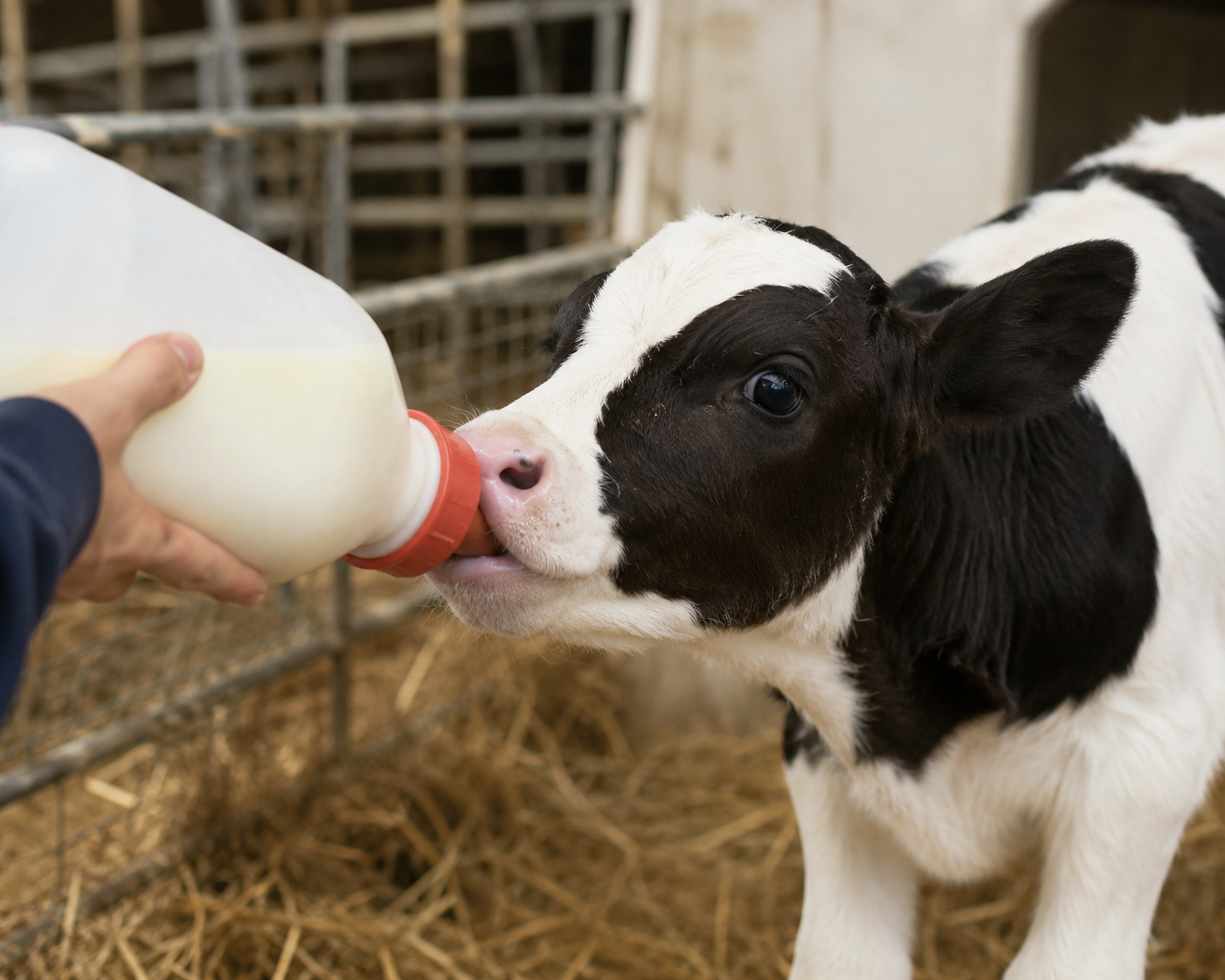
Once-a-day (OAD) milk feeding is not just a labour-saving method suitable for healthy calves from 28 days of age, this system also promotes earlier rumen development, prepares calves for weaning and makes more time for calf husbandry.
Read more...

Don’t let flies compromise your youngstock health 

Flies can cause serious stress, disease, and productivity loss in young calves during the summer months. This guide covers effective fly control for calves using hygiene, traps, and natural solutions like garlic supplementation to help protect your youngstock and maintain animal health.
Read more...

Preventing bacteria contaminating colostrum and transition milk produced in robotic milking systems

Maintaining colostrum hygiene in robotic milking systems is vital for calf health and immune development. This article explores the risks of bacterial contamination, highlights research findings, and offers best practices for collecting and storing colostrum and transition milk in automated dairy operations.
Read more...

Bluetongue: What to look out for in Calves

Bluetongue can be passed to the unborn fetus from an infected pregnant cow. Calves are typically born small and weak, blind or deformed. Death of calves can occur after a few days of birth.   While the clinical signs are more severe in sheep, cattle can present signs of the disease.   The main clinical signs of […]
Read more...

Transformula and Shine Featured in Dairy Farmer Magazine

We are delighted to see Transformula and Shine Twice-a-Day replacer featured in the new isssue of Dairy Farmer magazine.
Read more...

How to reduce bacterial contamination of colostrum

The awareness and importance of testing and feeding good-quality colostrum has become increasingly popular over the last few years. However, the colostrum storage and handling process is sometimes overlooked [...]
Read more...

Beef cross calves thrive on two step feeding regime

A two-step approach to calf milk replacer (CMR) feeding has helped a Leicestershire dairy farm cut calf deaths to under 2% and lower the incidence of scour. John Greaves and his family run a herd of 220 all-year-round calving Holstein Friesians at Lodge Farm. It is an 800-acre mixed dairy, beef and arable farm. They […]
Read more...