


Article
Beef cross calves thrive on two step feeding regime
A two-step approach to calf milk replacer (CMR) feeding has helped a Leicestershire dairy farm cut calf deaths to under 2% and lower the incidence of scour.
John Greaves and his family run a herd of 220 all-year-round calving Holstein Friesians at Lodge Farm. It is an 800-acre mixed dairy, beef and arable farm. They have an average yield of 9,000 litres of milk, which they sell to Long Clawson Dairy.
The Greaves’ Farm
The business is self-sufficient in feed with grass, wheat, barley, and maize all grown on the farm. The team rears approximately 50 replacement heifers a year using sexed semen, and these calve from May to September
Beef calves are produced from a Limousin bull or AI’d to British Blue and Aberdeen Angus genetics. They are reared through to finishing at an average of 20-24 months old. They are then sold to locally-based Foyle Foods or Pickstocks at 550kg for steers and 500kgs for heifers. When housed they are fed a ration of maize silage, grass silage, soya, brewers grains and sugarbeet pulp.
All calves are fed their dam’s colostrum for the first four feeds and are then moved into pens of five. Black and white as well as beef cross calves are moved to a separate unit run by the family a couple of miles away and will be grazed on rented land over the summer months.
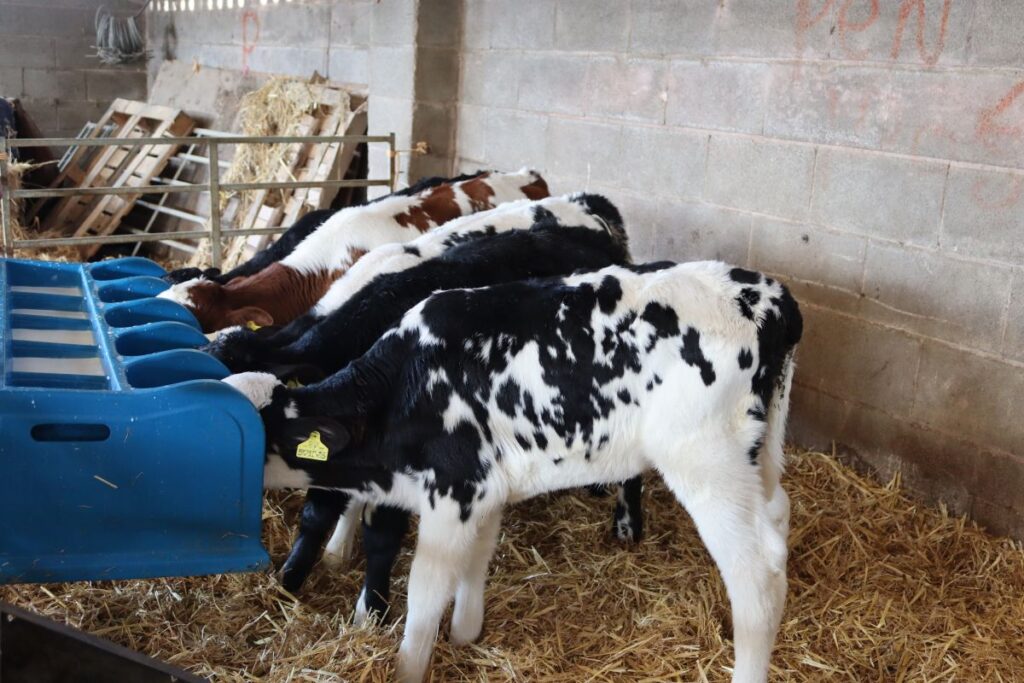
During the summer, all cattle over four months old are fully grazed with the milking cows given access to a total mixed ration (TMR) to supplement grazing. Dry cows are housed to ensure free access to a close up dry cow ration.
John has 20 years of experience of calf rearing and is the main rearer. His father, Mark, and uncle, Steven, work across the business. John’s cousins, Georgina and Joe, operate the arable enterprise. The farm also regularly hosts veterinary students from the University of Nottingham.
A principal goal has been to improve calf-rearing practices. This has been achieved over the last four years, via a series of small changes and tweaks. Central to this ambition, after previous outbreaks of cryptosporidium and rotavirus, has been reducing disease incidence rates and, as a consequence, enhancing calf performance.
Calf-rearing protocols and feed plans
To assist John and the team, Mollie Phipps, of Bonanza Calf Nutrition, has helped to develop calf-rearing protocols and feed plans.
As the first step in a series of changes, feeding was switched from whole milk to CMR-only. This reduces the risk of Johne’s disease transmission and helps improve consistency in the diet.
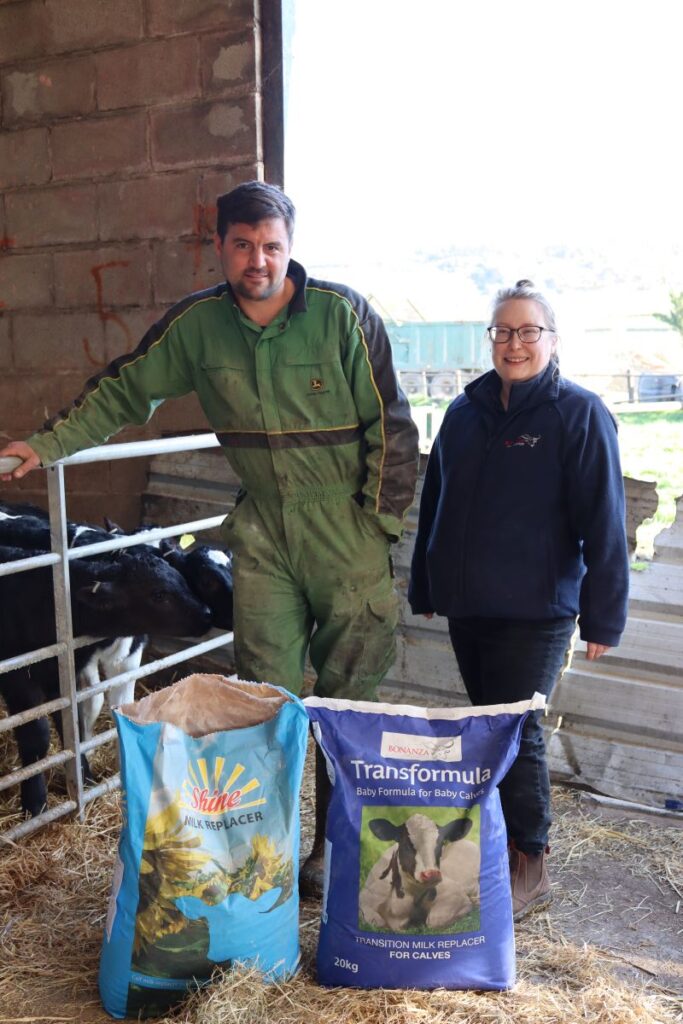
After receiving the first four feeds as colostrum, calves are introduced to Transformula. Transformula is a transition milk replacer, manufactured by Bonanza Calf Nutrition. It is specifically formulated to be fed after colostrum, fed to calves at three litres twice a day at 140g/litre.
Transition milk supports a calf’s immune and digestive systems. In recent trials at Harper Adams University farm, calves fed transition milk out-performed those that weren’t in their first four weeks, and beyond. As a transition milk replacer, it mirrors those developmental benefits and also the significant improvements seen in milk production in the first lactation.
For the Greaves family, the switch away from whole milk has played a key role in achieving their rearing targets. Since the transition, there have been fewer cases of calf scours and therefore less performance setbacks.
After 10 days on the transition milk-based calf milk replacer, the diet switches to Shine Twice-a-Day replacer. This is fed to calves at three litres twice a day at 125g/litre.
This powder is the first to use sunflower oil instead of palm oil or soya oil. This makes it easier to mix in all systems, including when it is added to cold water. Excluding palm and soya oils from feeding systems also satisfies the requirement of some supermarket buyers.
Benefits of two-step feeding
Since introducing this two-step approach of feeding, John has seen first-hand how it sets his calves up for a good start in life.
Calves are fed in age order, with the younger calves fed first. This minimises the risk of teat-to-mouth transmission of pathogens.
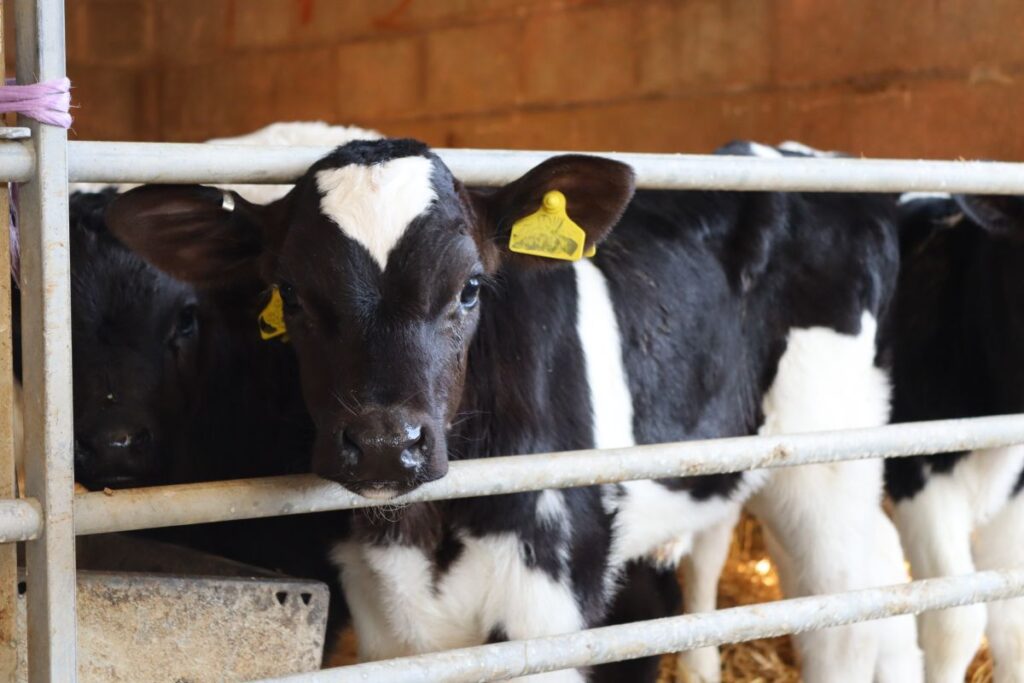
Rearing in groups of five means there is less competition for feed in this smaller group size and, crucially, it lowers the risk of disease transmission which makes it easier for John to monitor health and performance.
There are strict hygiene protocols, with all feeding equipment cleaned twice a day and rigorous cleaning and disinfection of pens between batches.
John weans at nine weeks according to dry feed intakes and calf performance. The weaning regime begins by reducing CMR feeding frequency to once a day at approximately eight weeks of age. After a week, the volume of CMR fed is reduced.
Leave a Reply